
天鵝、Freddo、喜鵲?3個英國人都懂的文化冷知識
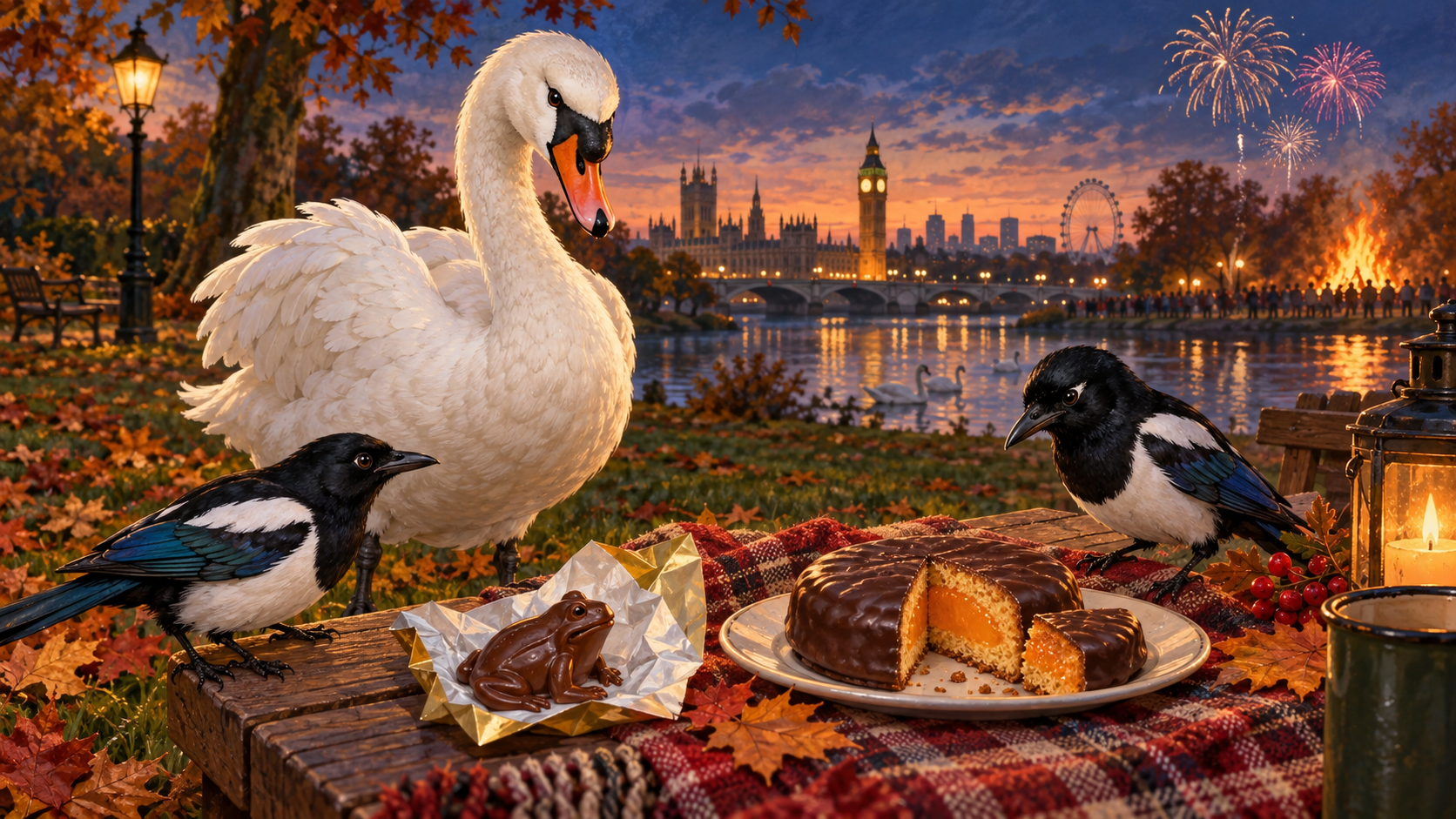
To start off today’s blog post, I have a few general knowledge questions for you… First, which British wildlife could break a man's arm? Second, which British chocolate bar measures inflation? And finally, which date of the year should we "Remember, remember…"?
Would you like the answers…? Here you go: a swan, a Freddo, and the 5th of November!
If that little quiz left you confused, baffled, or completely nonplussed, this week's post is for you…
今天的文章,就先從幾道英國常識題開始吧……首先,哪一種英國野生動物可能把人的手臂弄斷?第二,哪一款英國巧克力可以用來衡量通貨膨脹?最後,一年中的哪一天,是大家應該牢記「切記,切記……」的日子?
想知道答案嗎?答案揭曉:天鵝、Freddo 巧克力,以及 11 月 5 日!
如果這幾道題讓你一頭霧水、摸不著頭緒,甚至完全不知所措,那麼這週的文章正適合你……
Linguists call this kind of shared knowledge "cultural literacy" – a background stock of names, phrases, dates, and references that members of a culture all just seem to know. An academic called E.D. Hirsch even compiled a whole dictionary of it in the 1980s. As is often the case with cultural questions, this sparked a lot of debate, not only about what belonged on the list, but also about who gets to decide the list in the first place.
Luckily, you definitely don't need to memorise an exhaustive list of references to feel at home in the UK. But having a local on hand to let you in on a few can make a big difference.
In today’s post, I’ll take you through some of the big cultural in-jokes and shared facts we all know so that next time a colleague brings one up in the pub, you can confidently join in rather than be left scratching your head.
Where possible, I’ve also delved into the reasons behind the references, so by the time you’ve finished reading, you’ll actually be a little better informed than your average Brit!
語言學家把這種大家共同掌握的知識稱為「文化素養」(cultural literacy)——也就是一個文化圈裡的人,通常不需要特別解釋,就會自然知道的一些人名、用語、歷史日期和典故。1980 年代甚至有一位名叫 E.D. Hirsch 的學者,整理出了一整套這類文化知識的辭典。不過,文化相關的議題往往少不了爭論,當時引發的討論不只是「哪些內容應該被列入其中」,還包括「究竟由誰來決定這份清單」。
好消息是,你當然不需要把一份鉅細靡遺的文化典故清單全部背下來,才能在英國生活時感到自在。不過,如果身邊剛好有個熟悉當地文化的人,帶你認識其中一些大家習以為常的典故,確實能讓你更快融入。
在今天這篇文章裡,我會帶你認識一些英國人都心照不宣的文化梗和共同知識。這樣下次同事在酒吧聊起這些話題時,你就能自然地加入對話,而不是只能一臉困惑地抓著頭想「到底在說什麼?」
我也會盡可能帶你了解這些典故背後的由來。等你讀完這篇文章,說不定對這些英國文化的背景還會比一般英國人多懂那麼一點!
💡 想邊學英文邊了解英國?用文化帶你輕鬆提升語言力!這堂 英語文化課 每週進行的主題都實用又有趣~別錯過!
True fact or urban myth? 真有其事,還是都市傳說?
1. A swan can break a man’s arm. 天鵝可以把人的手臂折斷。
Although swans rarely come up in casual conversation, you can be fairly certain that if they do, someone will bring up the fact that a swan can break a man’s arm. Why? Not really sure. But this is something I’ve heard time and time again since I was a small child. I think people just like the drama of it. But is it true?
Verdict: mostly myth. Swans are large, powerful and famously bad-tempered when they’re guarding their nest. You should definitely give them a wide berth and never try to provoke them. But the people who rescue swans for a living say it’s unlikely that they could actually snap your arm. Instead, a wallop from their wing would probably just give you a nasty bruise. But don’t let that stop you from confidently expressing this as “fact” – discussing it still functions as a bonding exercise with friends and colleagues.
雖然天鵝很少會出現在日常閒聊的話題裡,但你幾乎可以確定,如果真的聊到天鵝,一定會有人提起「天鵝可以把人的手臂折斷」這件事。為什麼?其實也說不上來。但從我還是個小孩的時候起,就一次又一次聽到這個說法。我想,大家可能只是喜歡這種帶點戲劇性的說法。但這真的是真的嗎?
結論:大致上是都市傳說。天鵝體型大、力量強,而且在守護巢穴時出了名地脾氣不好。你當然應該離牠們遠一點,更不要故意去招惹牠們。不過,以救援天鵝為業的人表示,天鵝其實不太可能真的把人的手臂「折斷」。牠們更有可能用翅膀狠狠甩你一下,頂多讓你留下大片瘀青。不過,這可不代表你下次不能信心滿滿地把它當成「事實」講出來——因為跟朋友或同事討論這種話題,本身就是一種拉近彼此距離的方式。
2. In the UK, you're never more than six feet from a rat. 在英國,你永遠不會離老鼠超過六英尺(約 1.8 公尺)
This is another fact that gets repeated with total confidence up and down the country, although sometimes it’s ten feet and other times it’s spiders, not rats – basically, whichever one will cause the most distress to your particular friend group.
Verdict: Also a myth. The number seems to trace back to a guess from around a century ago (roughly one rat per acre of farmland), which somebody then converted into a neat but terrifyingly close distance. Luckily for us, the maths doesn’t really hold up.
這也是一個在英國各地被人講得煞有其事的「事實」。不過,有時候版本會變成「十英尺」,也有時候主角不是老鼠,而是蜘蛛。基本上,哪一種說法最能讓你那群朋友感到崩潰,就用哪一種。
結論:同樣是都市傳說。這個數字似乎可以追溯到大約一百年前的一個推測——當時有人估計,每英畝農地大約有一隻老鼠。後來不知怎麼的,這個數字被換算成了一個聽起來既精準、又近得令人毛骨悚然的距離。幸好,這套算法其實不太站得住腳。
Food-related in-jokes 食物相關的英國文化梗
1. We measure inflation using Freddos 我們用 Freddo 巧克力來衡量通貨膨脹
I think every country has its own equivalent for this. When complaining about the ridiculously high cost of living, most Brits quote the price of a Freddo (or else the lunchtime meal deal).
Freddos are little frog-shaped chocolate bars that used to cost only 10p for most of the early 2000s. Nowadays, they cost a whopping 35p, although I did recently see them in Waitrose for 50p, which just feels like a slap in the face, to be honest.
我想,每個國家都有類似的說法。當大家抱怨生活成本高得離譜時,很多英國人會拿一根 Freddo 的價格來當作「物價到底漲了多少」的指標(不然就是看午餐套餐的價格)。
Freddo 是一種青蛙造型的小巧克力棒,在 2000 年代初期的大部分時間裡,一根只要 10 便士。但現在已經漲到 35 便士,最近我甚至在 Waitrose 看到賣 50 便士的——老實說,這真的讓人覺得被狠狠打了一巴掌
2. Is a Jaffa Cake a cake or a biscuit? Jaffa Cake 到底是蛋糕還是餅乾?
Bring this question up at a dinner party and you’ll be surprised at the amount of passion you’ll provoke in your dinner guests.
Believe it or not, this silly debate was also once a serious legal question. Chocolate-covered biscuits are taxed in the UK, but cakes are not. So, in 1991, it fell to an actual tribunal to decide what a Jaffa Cake really is. McVitie's, the maker, argued it was a cake, pointing out (among other things) that a Jaffa Cake goes hard when it's stale, whereas a biscuit goes soft. They even baked a giant one to prove the point. (According to the legal ruling, it's a cake, by the way.)
你可以在晚宴上突然丟出這個問題,然後看著賓客們意外地激動起來。你會很驚訝,這個看似無聊的問題竟然能引發這麼大的熱情。
不過你可能不敢相信,這個看似愚蠢的爭論,過去還真的曾經是一個嚴肅的法律問題。在英國,巧克力外層的餅乾需要課稅,但蛋糕不用。 所以在 1991 年,這個問題甚至鬧上了正式的法庭,要由法庭決定 Jaffa Cake 到底算什麼。製造商 McVitie's 主張它是蛋糕,並提出了好幾個理由,其中之一就是:Jaffa Cake 放久了會變硬,但餅乾放久了反而會變軟。為了證明這一點,他們甚至真的做了一個巨大的 Jaffa Cake!(順帶一提,最後的法律裁決是:它算蛋糕。)
3. "This is not just X, this is M&S X" 這不只是普通的 X,這可是 M&S 的 X
Way back in 2004, legendary UK supermarket Marks & Spencer ran a series of food adverts that had a slow, very breathy voiceover describing their puddings and sauces in sensual, almost sexy detail. The line was: “This is not just food… this is M&S food.”
In the UK, we love a parody, so this was immediately taken up as a running in-joke. It’s often used to mock something that’s being made to sound posher or more indulgent than it actually is. Or, you can simply buy your British friend an M&S sandwich and deliver it to them with the line: “This is not just a sandwich…” I promise you that even 22 years on, we still appreciate the joke.
早在 2004 年,英國知名超市 Marks & Spencer 推出了一系列食品廣告。廣告裡用一種緩慢、低沉又帶點氣音的旁白,用近乎性感的方式,仔細描述他們家的布丁、醬料等食物。廣告的經典台詞是:「這不只是食物……這可是 M&S 的食物。」
英國人很愛惡搞(parody),所以這句廣告台詞很快就變成大家心照不宣的文化梗。現在,人們常用這個句型來調侃某樣東西——尤其是當有人把一件其實很普通的東西,講得好像特別高級、奢華又令人享受時。或者,你也可以直接買一個 M&S 的三明治送給你的英國朋友,然後用非常認真的語氣對他說:「這不只是三明治……」我保證,即使過了 22 年,英國人還是會覺得這個梗很好笑。
Shared sayings and rhymes 大家耳熟能詳的俗語與童謠
1. “Remember, remember, the fifth of November, gunpowder, treason, and plot.” 「記住,記住,11 月 5 日;火藥、叛國與陰謀。」
This one marks Bonfire Night. In 1605, a group of conspirators (the most famous being Guy Fawkes) plotted to blow up Parliament and King James I with barrels of gunpowder hidden in the cellars below. The plot was foiled and Fawkes was caught in the early hours of the 5th of November.
We teach children this rhyme to help them remember the date and the story. Arguably, the only part of the rhyme that’s really memorable is “November”, but people still seem to use it a lot.
這句話是在說英國的篝火之夜(Bonfire Night)。1605 年,一群陰謀策劃者——其中最有名的就是 Guy Fawkes——密謀在國會地下的地窖裡藏入數桶火藥,企圖炸毀國會大廈以及當時的國王詹姆士一世。不過,這場陰謀最後被成功阻止,Guy Fawkes 也在 11 月 5 日凌晨被捕。
英國人會教小朋友念這首押韻的童謠,幫助他們記住這個日期和背後的故事。嚴格來說,這首童謠裡真正讓人記得住的,大概只有「November」吧(笑)。但即使如此,大家至今還是很常引用這句話。
2. "One for sorrow, two for joy…"「一隻代表悲傷,兩隻代表喜悅……」
This is the rhyme you’ll mentally repeat whenever you see a group of magpies (black and white birds very common in the UK). It’s used to tell your fortune, so if you see one magpie, it means sorrow, two means joy, then it goes: "…three for a girl, four for a boy, five for silver, six for gold, seven for a secret never to be told."
Magpies have always carried a slightly mysterious, perhaps even ominous reputation, and there are lots of superstitions about how you’re supposed to ward off bad luck when you see one by itself (one magpie meaning “sorrow”, after all). Some people greet it by saying “Good morning, Mr Magpie”. Others salute it. Another option is to (pretend to) spit in your hand.
In order to cover all bases, my dad will greet it, (pretend to) spit in his hand, and then salute it. So don’t be alarmed if you.
每當你在英國看到一群喜鵲(黑白相間、在英國非常常見的鳥),腦中很可能就會不自覺地念起這首童謠。這是一種用來預測運勢的民間說法:「一隻代表悲傷,兩隻代表喜悅,三隻代表女孩,四隻代表男孩,五隻代表白銀,六隻代表黃金,七隻代表一個永遠不能說出的秘密。」
喜鵲一直帶有一種神秘、甚至有點不祥的形象,因此也衍生出許多迷信:如果你只看到一隻喜鵲——畢竟按照童謠來說,一隻代表「悲傷」——就得想辦法避開厄運。有些人看到單獨一隻喜鵲時,會跟牠打招呼說:「早安,喜鵲先生。」也有人會向牠敬禮。還有一種做法,是假裝朝自己的手掌吐口水。
為了以防萬一、什麼方法都做足,我爸爸每次看到一隻喜鵲,都會先跟牠打招呼,再假裝往手掌吐口水,最後還要向牠敬禮。所以,如果你看到有人這樣做,也不用太驚訝——
So, there you have it! A handful of the references you’re likely to come across when visiting or living in the UK.
If you enjoyed this post, this is really the whole idea behind our UK Culture Course. Think of it as having a British friend on hand to explain all the references, the in-jokes, and the odd little customs as they crop up, all while improving your practical English communication skills. If you haven’t already, you can check out our course here.
以上就是一些你在英國旅遊或生活時,很可能會遇到的文化典故與共同話題。
如果你喜歡這篇文章,其實這也正是我們 英語文化課程 想帶給你的體驗。你可以把它想像成:身邊隨時有一位英國朋友,當你遇到各種文化典故、英國人之間才懂的梗,或是一些奇特又有趣的小習慣時,隨時幫你解釋來龍去脈;同時,也能在這個過程中提升你的實用英語溝通能力。如果你還沒看過我們的課程,可以到這裡了解更多。
Vocabulary
nonplussed (adj.) 不知所措的;困惑的
to let (you) in on (phr. v.) 告訴(你)內情;讓(你)知道
an in-joke (n.) 只有圈內人才懂的笑話;內行梗
exhaustive (adj.) 詳盡的;完整的
(to be left) scratching your head (idiom)(因困惑而)摸不著頭緒;百思不得其解
to delve into (phr. v.) 深入探討;仔細研究
to give (sth/sb) a wide berth (idiom) 與(某事/某人)保持距離;避開
a wallop (n.) 重擊;猛擊
whopping (adj.) 驚人的;巨大的
a slap in the face (idiom) 當頭一棒;令人難以接受的打擊
a parody (n.) 戲仿;惡搞
to foil (sth) (v.) 挫敗;阻止(某事)
to ward off (phr. v.) 避開;抵擋
to cover all bases (idiom) 面面俱到;做好萬全準備
